
End-to-end MICE event planning means a single agency manages every phase of a corporate event from strategy and budgeting through to on-site execution and post-event ROI reporting. For companies in Bangalore and across India, this model has become the standard approach to managing Meetings, Incentives, Conferences, and Exhibitions without stretching internal HR or admin teams beyond their core functions.
India’s corporate events sector is one of the fastest-growing segments of the country’s MICE industry, which the
Yet most companies still manage MICE events through stretched internal teams HR, admin, or executive assistants handling venue bookings, vendor negotiations, and delegate logistics on top of their primary responsibilities. The results are predictable: missed deadlines, budget overruns, and events that consume more management bandwidth than they should.

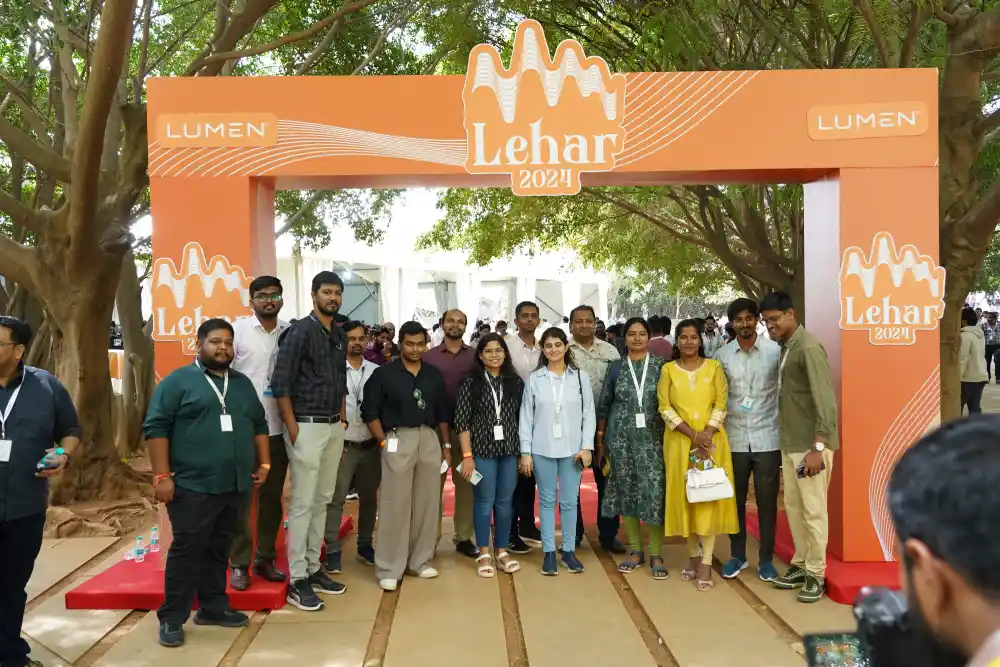
MICE stands for Meetings, Incentives, Conferences, and Exhibitions four distinct formats of corporate business gatherings, each with different objectives, scales, and logistical requirements. End-to-end MICE event planning is the management of all four formats under a single integrated service model, where one agency owns the full lifecycle of the event rather than handling only one component.
Most event vendors handle one dimension: venues manage space, travel agencies manage logistics, AV companies manage technology. End-to-end MICE management is different because it connects all these dimensions under a single brief, single budget, and single accountable team.
The distinction matters because most MICE events fail not at a single point but across the gaps between phases when the venue team hands off to the logistics team, or when the on-site team lacks authority to resolve a vendor issue. A genuine MICE management company eliminates those gaps by owning the whole process from day one to final report.
Before examining solutions, it is worth understanding precisely where corporate MICE events break down because the patterns are consistent across industries and company sizes.
Factor | In-House MICE Coordination | Professional MICE Management Company |
Dedicated expertise | HR and admin teams stretched beyond core roles | Full-time MICE specialists with domain knowledge |
Vendor network | Limited — builds from scratch each event | Established network — faster procurement, better rates |
Budget control | Over-runs common — scope creep, last-minute additions | Pre-agreed scope with contingency planning built in |
Technology | Basic tools — email, spreadsheets | Event management platforms, hybrid streaming, RFID check-in |
On-site management | Company staff diverted from attending to managing | Dedicated event team — client company staff attend as participants |
Post-event reporting | Ad hoc — no standard measurement | Structured ROI report — attendance, engagement, feedback, budget vs. actual |
Scalability | Hard to scale for large or multi-city events | Scales from 50-person meeting to 5,000-delegate conference |
The standard agency model for corporate events places the client in a coordination role they manage multiple vendors, consolidate quotes, and chase updates.
Single-point accountability: One dedicated account manager owns the event from brief to post-event report. Every vendor relationship, every timeline, and every budget line sits within that one engagement. The client does not manage vendors they manage one relationship.
Bangalore corporate network depth: Black Pepper Events operates in Bangalore’s corporate MICE ecosystem and maintains working relationships with the city’s major venues including the Bangalore International Exhibition Centre (BIEC), Nimhans Convention Centre, and the city’s leading five-star hotel convention facilities as well as specialist vendors across AV, production, catering, and delegate transport.
Technology-integrated execution: Event registration platforms, delegate mobile apps, hybrid event streaming, and post-event survey tools are standard parts of the Black Pepper Events delivery, not optional add-ons. This means clients receive structured data on attendance, engagement, and satisfaction rather than informal feedback.
Post-event reporting as standard: Every engagement concludes with a formal post-event report covering attendance against target, budget vs. actual, delegate satisfaction scores, and documented lessons for the next event. This report becomes the business case for future event investment.
The following is the standard corporate event execution process used by professional MICE management companies for a mid-to-large scale event. Timelines vary by event size this example is based on a 500-delegate corporate conference with a six-month lead time.
The four MICE event types each have distinct planning requirements.
Type | Examples | Scale | What a MICE Company Manages |
Meetings | Board meetings, leadership summits, team offsites, strategy retreats | 10–500 delegates | Venue, AV, catering, accommodation, travel coordination |
Incentives | Sales award trips, employee recognition programmes, reward experiences | 50–2,000 participants | Destination planning, travel logistics, awards ceremonies, group experiences |
Conferences | Industry summits, annual conferences, thought leadership forums, seminars | 200–10,000 delegates | Venue, speaker management, agenda, registration, branding, media coordination |
Exhibitions | Trade shows, product launches, brand activations, B2B expos | 500–50,000 visitors | Stand design and build, exhibitor coordination, visitor experience, logistics |
The distinction between event types matters for planning. A corporate conference is primarily a content and delegate experience challenge agenda, speakers, and session design drive outcomes. An exhibition is primarily a physical and logistical challenge stand design, visitor flow, and exhibitor coordination. An incentive programme is primarily an experience design challenge the quality of the destination and group experiences determines perceived value. A professional MICE planning company in Bangalore brings different competencies to each format, not a single templated event model.
Three structural shifts in the corporate events market have accelerated the move toward professional MICE outsourcing in the post-pandemic period.
Not all companies that call themselves corporate event planners or meeting and conference organisers deliver the same scope of service. This checklist separates companies providing genuine end-to-end
Selection Criterion | What to Verify | Red Flag |
End-to-end capability | Can they manage strategy, execution, and post-event reporting in one engagement? | Agency that only handles logistics but not measurement |
Venue and vendor network | Pre-existing relationships with venues, caterers, AV companies, travel partners | Building vendor list fresh for each event |
Technology stack | Event management platform, hybrid capability, delegate app, RFID or digital check-in | Manual-only processes with no digital event tools |
Experience with your event type | Ask for case examples of similar scale and format events | Generic portfolio with no industry or event-type specificity |
Dedicated account management | Single point of contact throughout — not a different team member each call | No named account manager assigned at briefing stage |
Transparency on pricing | Line-item budget with clear scope definition and change management process | Lump-sum quote with no budget breakdown |
Technology has changed what is expected of a corporate event, what is measurable, and what is possible in terms of delegate experience. A professional MICE management company in 2026 integrates these tools as standard, not as optional upgrades.
Bangalore’s position as a primary MICE destination in India is driven by measurable infrastructure and economic factors, not just general reputation. The
The gap between a corporate event that serves its business objective and one that simply takes place is almost always a planning and management gap not a budget gap. Companies that consistently run high-performing MICE events do so because they treat corporate event management as a specialist function requiring specialist partners, not as an administrative task that any capable team member can absorb.
In Bangalore, with its scale of corporate activity and depth of MICE infrastructure, the argument for professional end-to-end MICE management is straightforward: the city has the venues, the vendor ecosystem, and the event management talent to support events at any scale. The question is whether your company is structured to access all of that capability through a single, accountable planning partner.
Black Pepper Events handles complete MICE event execution in Bangalore from the initial brief to the post-event report. To discuss your next conference, incentive programme, exhibition, or corporate meeting, visit blackpepperevents.com or contact the team directly.
1. What does end-to-end MICE planning include?
End-to-end MICE planning means a single agency manages every phase of a corporate event strategy, budgeting, venue and vendor sourcing, delegate logistics, on-site execution, and post-event ROI reporting under one accountable team. This differs from standard event vendors, who typically handle only one component such as venue booking or AV production. Black Pepper Events manages all five phases (strategy, planning, pre-event, execution, post-event) as a single engagement in Bangalore.
2. How much does it cost to hire a MICE management company in Bangalore?
MICE management costs in Bangalore typically depend on event scale, format, and the number of delegates rather than a flat rate — a 50-person leadership meeting and a 5,000-delegate conference sit on very different budget scales. Most professional MICE companies work on a pre-agreed, fixed-scope budget with built-in contingency for change requests, rather than lump-sum quoting. Ask any prospective partner for a line-item budget breakdown before committing.
3. What is the difference between MICE and regular event management?
MICE stands for Meetings, Incentives, Conferences, and Exhibitions, and refers specifically to corporate business gatherings with defined objectives, audiences, and ROI expectations. Regular event management can include social, cultural, or personal events (weddings, parties) that don’t require the same procurement, compliance, and post-event measurement rigor that corporate MICE events do.
4. Can a MICE company manage hybrid (in-person and virtual) events?
Yes professional MICE management companies now treat hybrid delivery as a standard capability, not an add-on. This includes live streaming, virtual networking rooms, remote Q&A, multi-timezone scheduling, and replay access for delegates who can’t attend in person.
5.What’s the difference between a MICE conference, exhibition, and incentive programme?
A conference is primarily a content and delegate-experience challenge driven by agenda and speakers. An exhibition is primarily a physical and logistical challenge driven by stand design and visitor flow. An incentive programme is primarily an experience-design challenge, where destination quality and group experiences determine perceived value.
Written by: Mohammad Asif | Sr. SEO Executive, OneCity Technologies | Reviewed by: L K Monu Borkala, Chief Strategist, OneCity Technologies